Key takeaways
- GSC data is your most honest record of real search intent — the value is in acting on it, not just viewing it.
- Use AI to cluster queries by intent and surface striking-distance pages ranking 5–15 for the fastest wins.
- Structure content to answer follow-up questions, since most AI brand recommendations collapse after one query.
- Keep humans in the loop: AI prioritises, people decide what fits margin, brand and strategy.
- Read your query data against wider shifts — non-English and younger-audience trends signal strategy, not just SEO tasks.
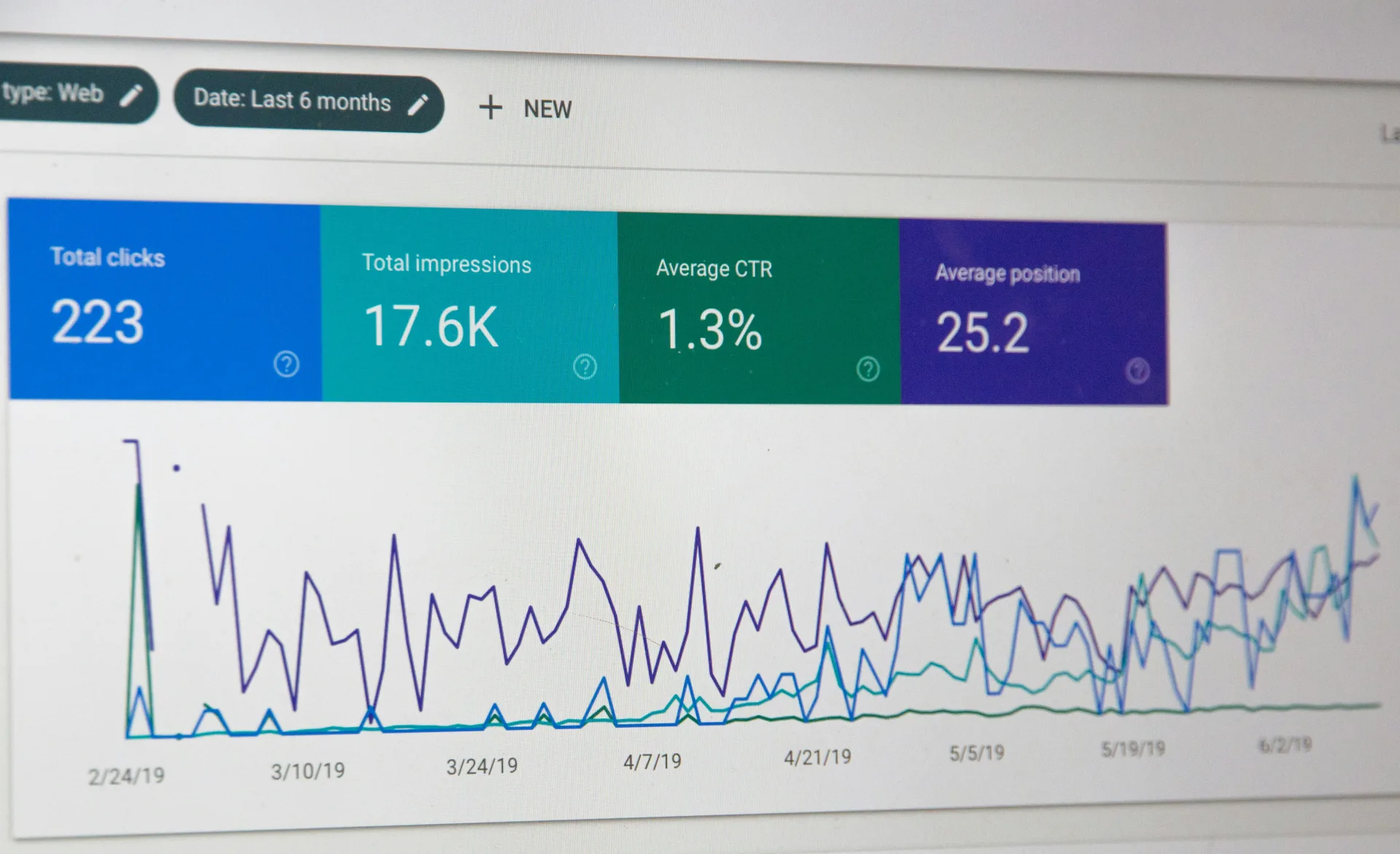
Most teams treat Google Search Console as a dashboard they glance at when traffic dips. That's a waste. The real value of GSC data is that it captures actual human intent at scale — every query, impression, click and position tied to a real page. The gap has never been the data itself; it's the time and skill needed to turn thousands of rows into a prioritised list of things to fix. That gap is exactly where AI now earns its keep.
Why GSC data has become more valuable, not less
The search landscape is fragmenting fast. Recent industry reporting shows ChatGPT's active users are now mostly non-English, with the sharpest growth in Africa and Asia. Meanwhile, a corrected AI-visibility study found that roughly 62% of brand recommendations made by AI assistants disappear after a single follow-up buyer question. Together these signals point to one thing: intent is scattering across languages, surfaces and conversational contexts you can't fully control.
In that environment, your first-party GSC data is one of the few honest, unfiltered records of what people genuinely search before they land on you. It tells you which real queries convert to clicks, where you rank on the cusp of page one, and which content the market actually wants. That makes it the raw material for both classic SEO and the emerging discipline of getting cited by AI answers.
The AI layer: from raw export to prioritised action

The recent fix to Google's page indexing report — delayed for three weeks before fresh data returned — was a useful reminder that the platform is a source, not a strategy. AI is what converts that source into decisions. Here's the workflow we run for clients.
1. Cluster queries by intent, not by keyword
Export your Performance report and let a language model group queries into intent clusters: informational, commercial, navigational, local. This surfaces demand themes a keyword list hides, and it reveals the questions AI assistants are likely to be asked about your category.
2. Hunt the striking-distance pages
- Filter for queries ranking in positions 5–15 with strong impressions.
- Ask the model to match each to the ranking URL and diagnose the gap: thin content, weak internal links, missing entities.
- Rank the opportunities by potential clicks, not vanity volume.
These are the fastest wins — small movements at the top of page two produce outsized click gains.
3. Detect decay and indexing issues early
Feed AI a week-over-week comparison to flag pages losing impressions before the traffic drop shows up in revenue. Cross-reference the indexing report so you catch de-indexed or crawl-blocked pages the moment they slip.
4. Turn queries into content briefs
The most useful step: have AI draft briefs from real query clusters, including the follow-up questions users ask. Given that most AI brand recommendations collapse under a second question, structuring content to answer the next question is now a competitive edge.
Use AI to augment, not to replace judgement

A word of caution grounded in the current discourse: selling AI as a wholesale replacement for people wins short-term attention and erodes long-term trust. The same logic applies internally. AI clusters and drafts brilliantly, but a human decides which opportunities align with margin, brand and roadmap. The model doesn't know that a high-volume query attracts unqualified traffic, or that a legal constraint rules out a promising angle.
This matters doubly for local and multi-location brands, where marketing complexity is genuinely overwhelming. An AI layer over GSC and Google Business Profile data can standardise diagnosis across hundreds of locations — but the four-step loop of audit, prioritise, execute, measure still needs owners.
Watch the audience shifts your data can't see
Finally, read your GSC data against the bigger picture. Younger audiences are declining across platforms faster than surface metrics suggest, and search intent is moving into non-English and conversational contexts. If your query data skews to an ageing segment, that's a strategic flag, not just an SEO task. The teams that win pair the precision of their own data with awareness of where attention is actually going.
Start small: one clustered export, one striking-distance list, one AI-drafted brief. Ship the fix, measure the click delta, repeat. That loop — data in, prioritised action out — is how GSC stops being a dashboard and starts being a growth engine.
Sources
- ChatGPT Users Are Now Mostly Non-English via @sejournal, @MattGSouthern — Search Engine Journal
- Selling AI As A Replacement Wins Attention & Kills Trust via @sejournal, @gregjarboe — Search Engine Journal
- Your Younger Audience Is Declining Faster Than It Looks — Search Engine Journal
- Google indexing report in Google Search Console fixed — Search Engine Land
- Local Marketing Is Too Complex: What the Data Says & What To Do — Search Engine Journal
- 62% Of AI Brand Recommendations Vanish After One Buyer Question – New Data via @sejournal, @gregjarboe — Search Engine Journal