Key takeaways
- Control is the strongest driver of psychological ownership — and ownership drives retention and advocacy.
- Earn control through predictable cause-and-effect, reversibility, and honest boundaries.
- Faked control (dead sliders, silent resets) does more damage than offering no control at all.
- Tactile, high-fidelity motion that honors user intention communicates responsiveness better than copy.
- Designers should own what they can genuinely influence — misplaced ownership drains energy, well-placed ownership compounds it.
The most loyal users aren't the ones who simply use your product. They're the ones who feel it's partly theirs. That feeling — psychological ownership — is built on a foundation most teams underestimate: a real, earned sense of control. When people believe their actions produce predictable, meaningful results, they stop being passive visitors and start behaving like invested stakeholders.
At Evocative, we treat control not as a UX nicety but as the mechanism that converts attention into commitment. Below is how we think about designing for it — and where teams tend to get it wrong.
Why control drives ownership (and revenue)
Psychological ownership grows from three roots: the ability to control something, deep familiarity with it, and personal investment in it. Of the three, control is the accelerant. A user who can shape an interface — reorder a dashboard, undo a mistake, tune a preference — quickly develops the other two. Familiarity and investment follow naturally once someone believes their input matters.
The business logic is direct. Owned products retain better, get recommended more, and forgive the occasional flaw. But there's a sharp caveat, and it's one the Nielsen Norman Group articulates well: ownership attached to things a user can't actually control becomes frustration. Promise agency, then withhold it, and you manufacture resentment instead of loyalty.
Design that earns control, not just implies it

The gap between the feeling of control and its reality is where most experiences fail. Earning genuine control means three commitments:
- Predictable cause and effect. Every interaction should produce a result the user could have anticipated. Surprise is the enemy of ownership.
- Reversibility. Undo, drafts, confirmation on destructive actions. People take ownership of spaces they feel safe to experiment in.
- Honest boundaries. Don't offer a slider that barely moves the needle or a customization that resets silently. Fake control is worse than no control.
The tactile dimension
Control isn't only cognitive — it's felt through the fingertips. Highly crafted, tactile interactions communicate responsiveness in a way that copy never can. The Smashing Magazine deep-dive on building a digital squeeze toy with Lottie makes this concrete: distance-based math and tight DOM event handling existed purely to keep the animation's response faithful to the user's gesture. That fidelity is the sense of control. When motion tracks intention precisely, the interface feels like an extension of the person using it — the physical basis of ownership.
This is why we push back on generic, off-the-shelf micro-interactions. Motion that lags, overshoots, or ignores input quietly tells users their actions don't count. Motion that honors intention tells them the opposite.
Control belongs to the makers, too
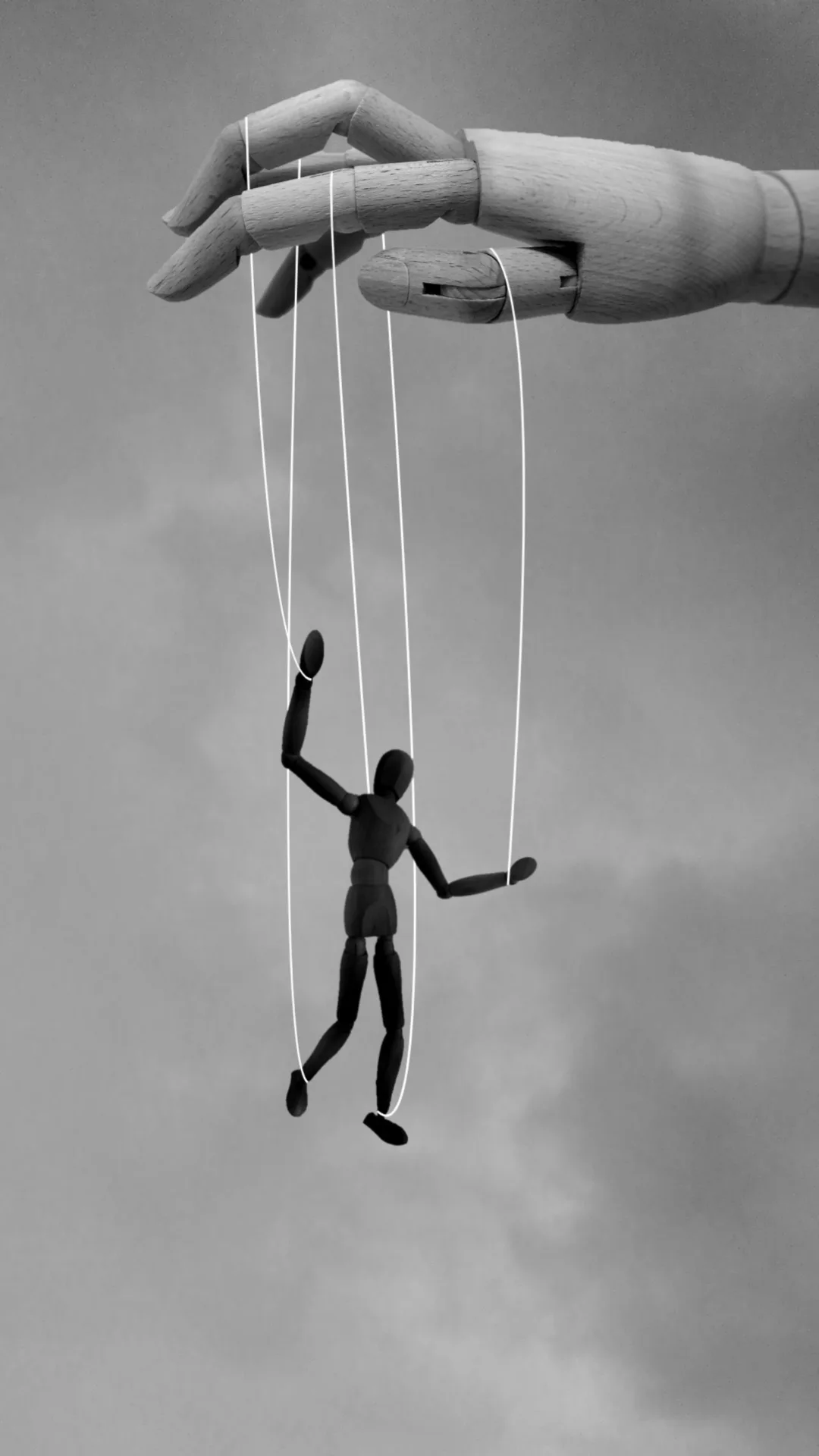
There's a second, quieter thread worth naming. As AI tooling spreads and "everyone can design" resurfaces — a phrase the UX Collective revisited recently — the question of who holds creative control gets sharper. Democratized tooling isn't a threat to good design; it's a chance for designers to stop waiting for permission and own outcomes end to end. But the same rule applies: ownership only pays off when it attaches to things you can genuinely influence. A designer who takes ownership of engineering constraints they can't change burns out. One who owns the interaction quality, the motion fidelity, the decision logic — that's ownership placed correctly.
The lesson mirrors the user-facing one exactly. Whether you're designing for people or with AI-assisted tools, control has to be real to be productive. Misplaced ownership drains energy; well-placed ownership compounds it.
Putting it into practice
When we audit an interface for ownership potential, we ask a short set of questions:
- Where can the user genuinely change something, and is that change visible and persistent?
- Does every gesture get an immediate, proportional response?
- Can users recover from mistakes without fear?
- Are we implying control we don't actually deliver?
Answer those honestly and you'll usually find one or two places where the promise of control outruns the reality. Close that gap first. It's cheaper than a redesign and it does more for retention than most feature launches.
Ownership can't be demanded and it can't be faked. It's the by-product of an interface that consistently respects what the user is trying to do — and gives them the means to do it. Build that, and users stop merely visiting. They move in.
Sources
- Building Tactile UX: Honoring Intentional Design With Lottie — Smashing Magazine
- Design’s dreaded phrase is coming back. This time we’re in control. — UX Collective
- Psychological Ownership: Own the Right Things — Nielsen Norman Group