Key takeaways
- Fragile SEO isn't bad luck — it's a design choice favouring short-term wins over durable assets.
- Own topics through interlinked clusters, not single rented keywords, so relevance compounds instead of decaying.
- Treat technical health as standing infrastructure, not a quarterly fire drill.
- Earn authority through genuine usefulness; loopholes get clawed back by algorithms, reputation doesn't.
- Durable SEO looks like a compound interest curve — slow at first, then quietly relentless.
The problem with SEO that panics
Every few months, an algorithm update rolls through and a familiar ritual begins: rankings wobble, dashboards flash red, and teams scramble to reverse-engineer what Google "wants." We've watched clients arrive at our door after exactly this cycle — traffic that spiked, then evaporated overnight. The uncomfortable truth is that fragile SEO isn't unlucky. It's a design choice, usually made in favour of short-term wins.
The alternative is what we call durable SEO: an approach where each piece of work makes the next one easier, and where core updates tend to reward you rather than punish you. It's slower to start and dramatically more resilient. Here's the playbook we actually use.
Principle 1: Build for the reader Google is trying to protect
Every core update is, at its heart, an attempt to better serve the person searching. When you optimise for a real human's job-to-be-done, you're aligned with the direction of travel — not fighting against it. We start every engagement by mapping the actual decisions a searcher is trying to make, not the keywords a tool spat out.
Practically, that means content that answers the question fully, links to genuinely useful next steps, and doesn't pad word count to hit an arbitrary target. When an update tightens the definition of "helpful," pages built this way move up, not down.
Principle 2: Own topics, not keywords

Ranking for a single keyword is a rented position. Owning a topic is an asset. We build topic clusters — a strong pillar page supported by focused, interlinked articles that cover the subject from every practical angle. This does three things at once:
- It signals genuine subject authority, which is exactly what algorithms increasingly measure.
- It captures long-tail queries you never explicitly targeted.
- It compounds — each new article strengthens the whole cluster through internal links.
The compounding effect is the point. A single article decays. A well-structured cluster gains momentum, because relevance and authority accumulate rather than reset.
Principle 3: Technical health as a foundation, not a fire drill
Technical SEO shouldn't be a quarterly audit that surfaces 400 issues nobody fixes. We treat crawlability, site speed, clean information architecture, and structured data as standing infrastructure — the equivalent of clean plumbing. When the foundation is solid, content and links do their job without friction, and updates targeting technical spam or poor experience pass you by entirely.
Principle 4: Earn authority, don't manufacture it

Link schemes and bought placements are exactly what updates are engineered to detect. Durable authority comes from being genuinely worth citing: original data, clear points of view, tools people reference. It's harder. It also can't be clawed back by an algorithm, because it isn't a loophole — it's a reputation.
Principle 5: Instrument everything, then be patient
Durable SEO requires nerve, and nerve requires data. We track leading indicators — impressions, crawl frequency, engagement quality, share of topic — not just the vanity rank of a single term. When an update hits, this instrumentation lets us distinguish a genuine problem from normal volatility, so we respond with analysis instead of adrenaline.
What this looks like over 18 months
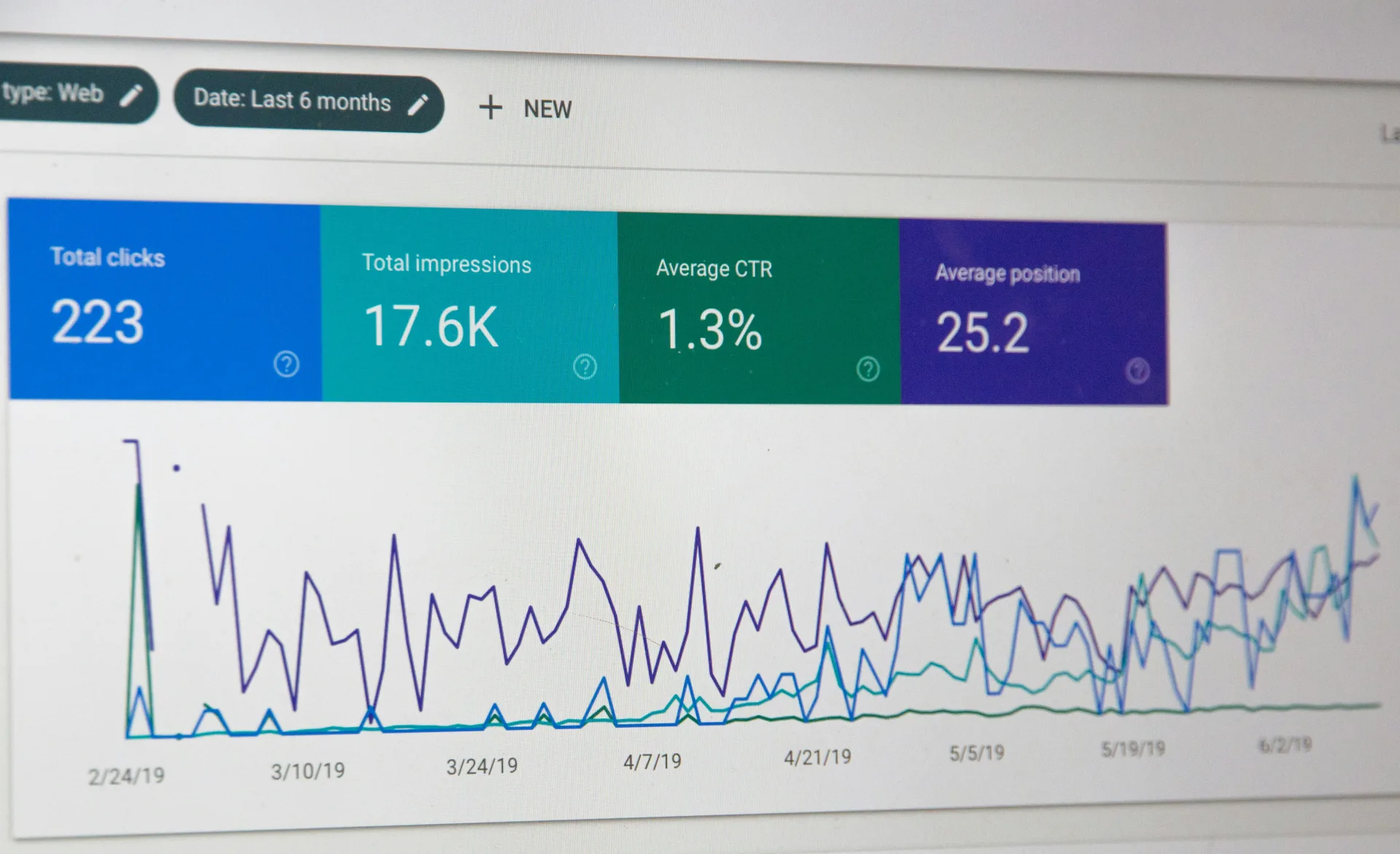
Fragile SEO looks like a heartbeat monitor: sharp spikes, deep crashes, exhausting to watch. Durable SEO looks like a compound interest curve — modest at first, then quietly relentless. By month twelve, the cluster you built in month two is ranking for queries you never wrote, feeding leads while you sleep. Core updates arrive, and mostly, nothing bad happens. Occasionally, something good does.
That's the whole trade: give up the sugar rush of quick wins, and inherit an asset that keeps paying. In a world of AI-generated content flooding every niche, the sites that survive will be the ones with real depth, real authority, and real usefulness — the exact things algorithms are converging toward measuring.
If you're tired of rebuilding your rankings every quarter and want to talk about an SEO foundation that compounds, we'd be glad to look at your situation together.