Key takeaways
- Lead reports with revenue, CAC and pipeline not rankings or traffic.
- Frame SEO as risk management: quantify the cost of doing nothing.
- You don't need perfect attribution track directional signals that connect to growth.
- AI now shapes B2B discovery, so report visibility in AI answers, not just search.
- Structure reports as business impact first, risk second, technical proof last.
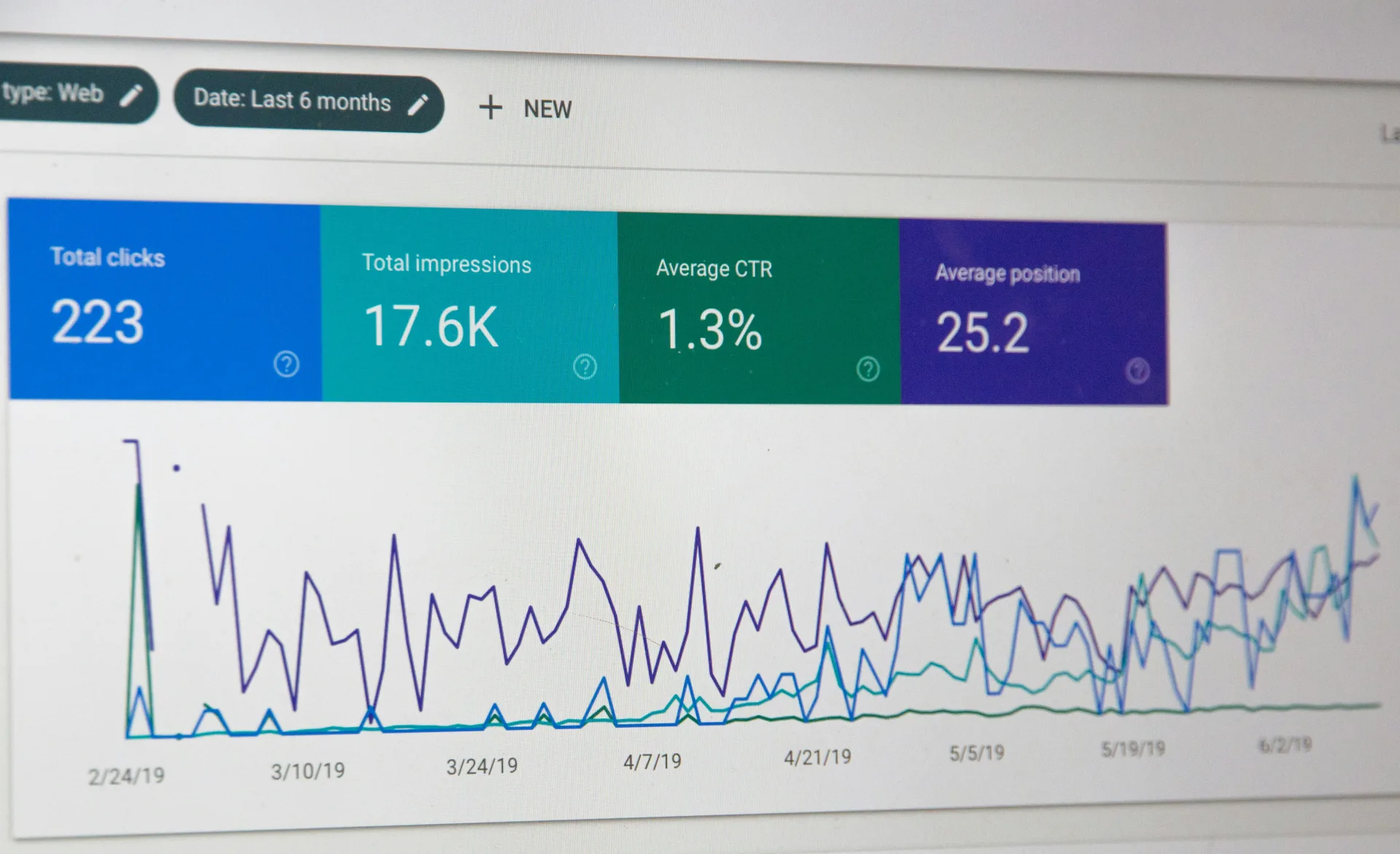
Most SEO reports fail before anyone reads them. They lead with keyword rankings, sessions and bounce rate, then wonder why the budget conversation stalls. The uncomfortable truth is that your CFO doesn't lie awake worrying about position three versus position one. They think about business risk, cost of acquisition, and pipeline. If your reporting doesn't speak that language, SEO looks like a cost centre instead of a growth engine.
Having sat on both sides of these meetings, we've learned that the metric isn't the problem the framing is. Below is how we help clients turn SEO from a technical curiosity into a line item leadership actively defends.
Stop reporting activity, start reporting business outcomes
Traffic is an input, not an outcome. Executives care about what that traffic does for the business. The shift is simple to describe and hard to execute: for every metric you present, answer the question "so what?" until you land on revenue, margin, or risk.
- Ranking gains become "non-brand organic now drives X% of qualified demos."
- Traffic growth becomes "organic reduced blended CAC by Y compared to paid."
- Technical fixes become "we removed a crawl issue that was suppressing our highest-margin product pages."
A commercially aware SEO strategy prioritises the pages, queries and fixes that touch revenue and profitability first. Not every keyword is worth winning. The ones connected to high-margin products and short sales cycles deserve your effort before vanity terms that convert nobody.
Frame SEO as risk management, not just growth
The strongest budget arguments we've made to finance leaders weren't about upside they were about exposure. If a competitor out-ranks you on your category-defining terms, that's pipeline you're structurally handing away. If your Google Business Profile data is unreliable a real issue right now, with some dashboards showing empty review counts while public listings display them fine you risk making local decisions on broken numbers.
Framing SEO around the cost of doing nothing reframes the whole conversation. A CFO who ignores a 20% ranking drop on money keywords is accepting a measurable revenue risk, and that's a language finance understands instantly.
Measure what matters, even without perfect attribution

SEO and the newer discipline of generative engine optimisation (GEO) both suffer from the same complaint: attribution is messy. Don't let perfectionism stall the investment case. You don't need a flawless last-click model to prove value you need directional evidence that connects your work to growth.
- Track assisted conversions and pipeline influence, not just last-click.
- Use branded search lift as a proxy for awareness driven by organic and AI visibility.
- Correlate content investment with movement in qualified leads over a rolling quarter.
This matters more than ever because AI is reshaping how buyers discover vendors. Recent research on B2B professionals shows AI tools now influence discovery, shortlists and evaluation long before a human ever fills a form. If you're only measuring what happens after the click, you're blind to most of the journey.
Report the way buyers actually decide
Modern B2B buying happens across AI assistants, peer reviews and self-directed research. Your reporting should acknowledge this. Show leadership where your brand appears in AI-generated answers, how your review profile compares to competitors, and where you're absent from the conversations that shape shortlists.
The same scrutiny buyers apply to AI vendors asking about genuine business value, data handling, and proof before purchasing is exactly the scrutiny your executives apply to your budget requests. Come prepared with customer proof, honest data, and a clear implementation path, and you look like an investment. Come with rankings screenshots, and you look like an expense.
A reporting structure that earns budget

Build every executive report around three layers:
- Business impact first: revenue influenced, CAC trends, pipeline contribution.
- Risk and opportunity second: competitive exposure, visibility gaps in search and AI.
- Supporting detail last: rankings, traffic and technical health as evidence, not headlines.
The order signals priorities. When you open with business impact and close with the technical proof, you tell leadership that SEO is run like a commercial function should be. That single change does more for your budget than any ranking milestone ever will.
Sources
- How AI tools shape the B2B buying process: A survey of 600+ US business professionals — Semrush Blog
- 5 questions to ask AI vendors before buying a tool — Search Engine Land
- How to make your SEO strategy more commercially aware — Search Engine Land
- Google Business Profiles Showing Empty Review Dashboards via @sejournal, @MattGSouthern — Search Engine Journal
- How to win SEO budget conversations with your CFO — Search Engine Land
- How to justify GEO investment without perfect attribution — Search Engine Land