Key takeaways
- Execution is now cheap and abundant; judgment and reflective thinking are the scarce, defensible edge.
- Futures thinking means considering plural futures and second-order consequences, not predicting one outcome.
- Well-chosen constraints organise thinking and expose assumptions that unlimited resources hide.
- Embed reflection as daily rituals: premortems, decision logs, weekly signal reviews.
- Thinking slowly is risk management: it prevents costly reversals and builds experiences that age well.
In an industry obsessed with shipping faster, the most valuable skill a designer can cultivate is slower, deliberate thinking. Not thinking for its own sake, but structured reflection that connects today's interface decisions to tomorrow's consequences. At Evocative, we've watched teams accelerate execution with AI while quietly losing the muscle that actually differentiates great product work: the ability to anticipate, question, and reframe. Futures thinking, treated as an everyday practice rather than a quarterly workshop, is how you rebuild that muscle.
Why execution speed is no longer the edge
Generative tools have collapsed the cost of production. A junior designer can now produce a dozen polished mockups before lunch. When output becomes abundant and nearly free, its value drops. What stays scarce is judgment: knowing which of those dozen directions is worth pursuing, and why.
This is the uncomfortable truth behind the AI design wave. The craft of pushing pixels is being commoditised. What remains defensible is reflective practice, the discipline of thinking in action (while you design) and on action (after you ship). That reflective loop is where strategy, ethics and long-term product coherence actually live.
Futures thinking, demystified
Futures thinking sounds like a boardroom exercise reserved for strategists. In reality it's a set of lightweight habits any designer can fold into daily work. The goal isn't to predict the future accurately, it's to widen the range of futures you consider before committing to a design decision.
- Signals over trends: Notice small behavioural shifts in how real users work around your product. Those weak signals often predict where demand is heading.
- Second-order consequences: For every feature, ask what happens after adoption. What new behaviour, dependency or misuse does it invite?
- Plural futures: Sketch the optimistic, the degraded and the unintended version of the experience you're building. Design for resilience across all three.
Constraints as thinking tools

There's a seductive myth that unlimited resources, infinite compute, endless tokens, boundless budget, produce better outcomes. The opposite is usually true. Well-chosen constraints organise thinking. They force prioritisation, reveal trade-offs and make the problem legible.
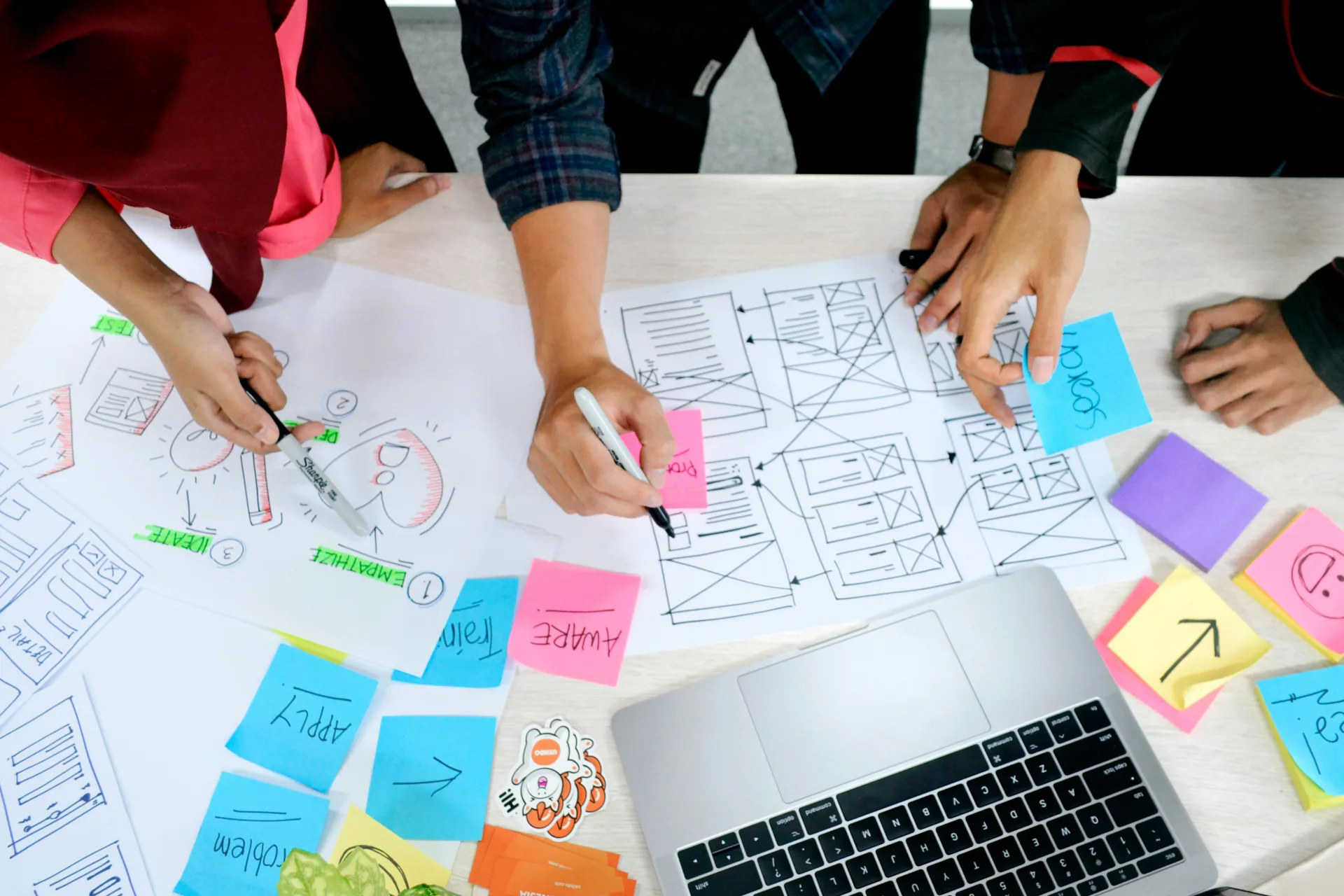
When we run futures exercises for clients, we deliberately impose limits: design this flow as if the user had no connectivity, or as if every AI call cost real money, or as if the feature had to work for the next decade without a redesign. These artificial boundaries surface assumptions that abundance hides. A constraint is not a limitation on creativity; it's the scaffolding creativity needs to stand on.
Making reflection a daily ritual
Reflective practice fails when it's treated as an event. The fix is to miniaturise it. Here's how we embed it into everyday UX work at Evocative:
- The five-minute premortem: Before finalising a decision, imagine it's six months later and the feature failed. Write down why.
- Decision logs: Record not just what you decided but what you were uncertain about. Future-you (and the AI assisting you) will thank you.
- Weekly signal review: Spend fifteen minutes collecting odd user behaviours, support tickets and edge cases. These are your raw futures material.
- Deliberate friction: Occasionally design the harder version first. The effort exposes what the easy version quietly ignores.
The business case for thinking slowly

Reflective, futures-oriented design isn't a luxury for mature teams, it's risk management. Products that ship without anticipating second-order effects accumulate debt: dark patterns that erode trust, features that don't scale, AI behaviours nobody governed. Each of these costs far more to fix retroactively than to foresee.
For the businesses we work with, the payoff is concrete. Teams that practice futures thinking make fewer expensive reversals, spot adjacent opportunities earlier, and build experiences that age gracefully. In a market where everyone can generate the same polished screens, the companies that win are the ones that thought harder about which screens deserved to exist.
The real competitive advantage in the AI era isn't a faster pipeline. It's a team that reserves the right to pause, question the brief, and design for the future it actually wants to create.
Sources
- Infinite tokens: the new country club flex — UX Collective
- Futures thinking as an everyday design practice — UX Collective
- Beyond the craft: Reclaiming Design as a Reflective Practice — UX Collective