Key takeaways
- Product design is a people industry wearing a tech costume; AI changes the costume, not the job.
- Usability is still measured by watching real users do realistic tasks, early and often.
- Use AI to speed up production, then reinvest that time into more user research, not faster shipping.
- For professional and high-stakes users, let AI reduce friction but never remove human agency over consequential decisions.
- Protect your research budget like your engineering budget; it's not the optional half.
Ask a room of product teams what they do, and you'll hear two answers that quietly contradict each other. One half talks about users: their frustrations, their contexts, the small moments where a product either earns trust or loses it. The other half talks about tooling: prototyping stacks, design systems, and now a growing roster of AI copilots that generate screens on demand. In the AI era, this tension has sharpened into a real question: is product design a people industry or a tech industry?
Our answer, after years of shipping interfaces for clients across e-commerce, SaaS and digitalisation projects, is that it has always been a people industry wearing a tech costume. AI changes the costume. It does not change the job.
Why the question matters now
When budgets are healthy, teams happily fund both halves. When money gets tight, something telling happens: the research, the user interviews, the usability testing get labelled "optional," while the production tooling stays. The visible, tangible output survives; the understanding that makes it worth building gets cut first. AI accelerates this instinct because it makes output cheaper than ever. If a model can generate twenty layout variations in a minute, why pay someone to watch five users struggle through one?
Because generating screens and understanding people are not the same activity. A model can produce something that looks finished. It cannot tell you whether a real person, under real pressure, with real goals, can actually get the job done. That gap is where usability lives.
Usability is still measured by watching people
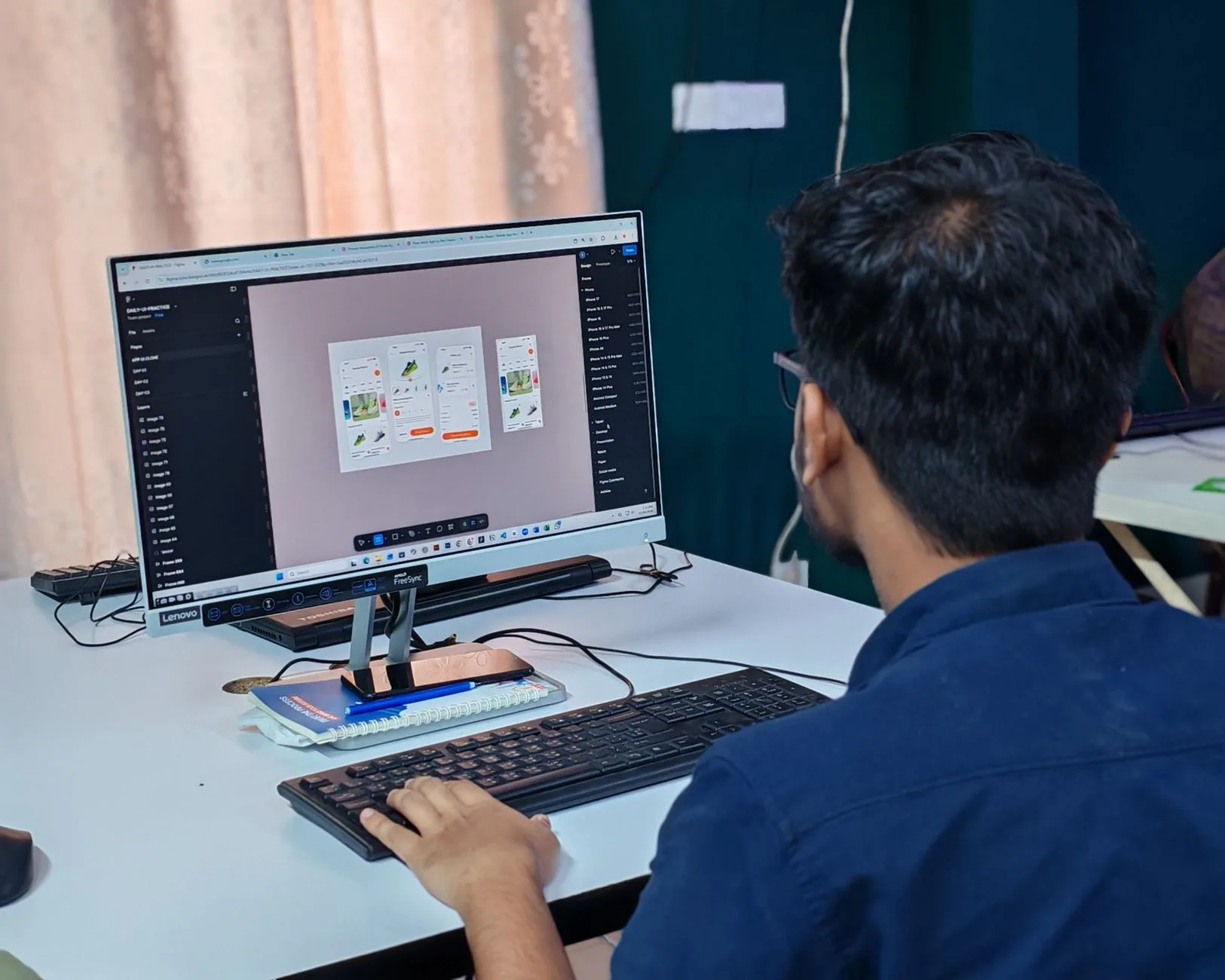
The oldest, most reliable truth in our field hasn't aged a day: usability is how easily people complete realistic tasks with a design, and the only way to know is to watch representative users attempt those tasks, early and often. AI doesn't replace that loop. If anything, it raises the stakes, because a model will confidently generate interfaces that feel plausible and are quietly wrong.
- Representative users, not personas on a slide. AI can draft a persona in seconds, but it can't sit a real customer in front of a checkout flow and reveal where they hesitate.
- Realistic tasks, not happy paths. Generated demos show the ideal journey. Users find the edge cases.
- Early and repeatedly. The faster AI lets you prototype, the more cycles of real testing you should run, not fewer.
Where to draw the line with AI and professional users

There's a particular trap when the people using your product are experts: doctors, logistics planners, financial analysts. AI can smooth an interface to feel effortless, but professional users often need control, transparency and the ability to override the machine. Automating a decision that an expert is accountable for isn't a convenience; it's a liability. The line to draw is this: let AI remove friction from the mundane, but never remove the professional's agency over the consequential.
In practice, that means designing for a dialogue rather than a verdict. Surface the model's reasoning. Make it easy to disagree. Keep the human in the loop where the cost of being wrong is high. The best AI-assisted products feel less like autopilot and more like a sharp junior colleague who shows their work.
What this means for how teams invest
If you treat product design as a tech industry, you'll over-invest in generation and under-invest in validation, and you'll ship fast, confident, untested work. If you treat it as a people industry, you'll use AI exactly where it earns its keep, and keep the human judgement where it's irreplaceable.
Our practical stance for clients:
- Use AI to compress the production of variations, boilerplate and first drafts, freeing designers for the harder work.
- Reinvest the time saved into more user research and more usability testing, not into shipping sooner.
- Protect the research budget the way you'd protect your engineering budget; it's not the optional half.
- For professional and high-stakes contexts, design the AI as an assistant that explains and defers, not an authority that decides.
The agencies and teams that win the next few years won't be the ones with the flashiest generative stack. They'll be the ones who used that speed to understand their users more deeply, and had the discipline to keep asking the only question that ever mattered: can a real person actually do the thing they came here to do?
Sources
- Where to draw the line before AI reaches professional users — UX Collective
- Usability 101: Introduction to Usability — Nielsen Norman Group
- Is product design a people industry or a tech industry? — UX Collective