Key takeaways
- The line between online and in-store commerce has effectively disappeared in 2026.
- Delivery certainty, not raw speed, is what removes customer friction and builds trust.
- With 43% of international sellers targeting France and Germany, cross-border logistics is now baseline infrastructure.
- Unified payment methods like Wero make in-store and online feel like one continuous relationship.
- Choose partners that treat online and physical retail as a single customer funnel.
The most useful thing to know about AI commerce in 2026 is that the line between shopping online and shopping in a physical store has effectively dissolved. French e-commerce crossed €196.4 billion in 2025 and is heading for the symbolic €200 billion mark, but the growth story is no longer about screens replacing shelves. It's about a single continuous experience where delivery, payment and logistics behave like one system, whether the customer is on a phone at midnight or standing in an aisle. The winners aren't the purest online players. They're the ones who removed the friction that sits between channels.
The delivery expectation has become the whole experience
Delivery is now inseparable from the act of buying. For a large majority of French shoppers it's considered an essential service, not a bonus. And that's exactly where the friction lives: people have adopted home delivery en masse, yet they still carry a list of irritants around timing, visibility, failed drop-offs and return complexity.
This matters for a simple reason. When customers judge a brand, they don't separate the product from the parcel. A brilliant checkout followed by a vague three-day delivery window destroys trust. This is where AI earns its keep operationally: predicting delivery windows, dynamically rerouting parcels, flagging at-risk orders before the customer complains, and personalising the promise per zone rather than making a one-size-fits-all pledge. The goal isn't faster for the sake of speed. It's certainty, because certainty is what removes the irritant.
Cross-border is now infrastructure, not a growth hack
A quarter-century ago, international shipping meant international mail. Today it's a core layer of the e-commerce stack. The maturity of players celebrating 25 years in cross-border logistics tells you the real shift: shipping across borders stopped being a specialist edge case and became plumbing that every serious merchant relies on.
The pressure is intensifying from outside, too. According to DHL's E-Commerce Trends 2026 study, France and Germany are now targeted by 43% of international sellers. France is no longer just a mature market to defend; it's a market being actively invaded by foreign competitors with slick localisation and increasingly credible delivery. For a local brand, that means the old comfort of home-turf advantage is gone. You either match international sellers on the fundamentals or you lose the customer at the point of highest expectation.
Payment: where the store and screen finally meet
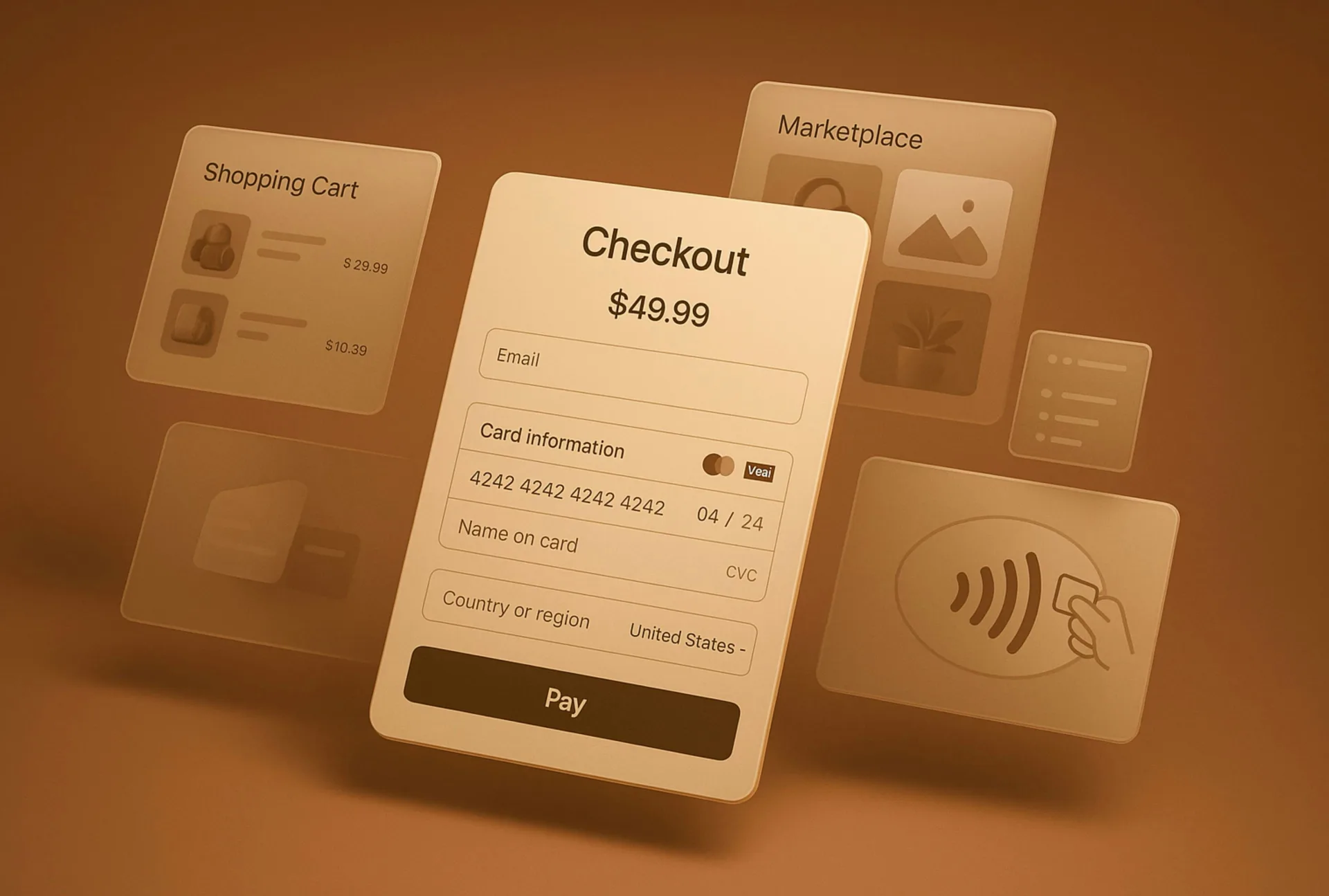
If delivery is where trust is tested after the sale, payment is where the channels physically converge. The arrival of Wero, the European payment initiative backed by a consortium of banks and payment providers, on Decathlon's German store in July 2026 is a signal worth reading carefully. A pan-European payment method moving from person-to-person transfers into major retail checkouts is a test of whether a genuinely borderless, bank-native option can compete with the incumbents.
The strategic point for merchants isn't which wallet wins. It's that payment is becoming the unifying layer across in-store and online. When the same method works at the terminal in the shop and in the browser, the customer stops experiencing two separate businesses. That continuity is what AI commerce is ultimately built to serve: one identity, one basket, one payment relationship, wherever the transaction happens.
What this means for your operating model
Pull these threads together and the pattern is clear. Delivery certainty, cross-border logistics and unified payment are no longer separate projects. They're facets of one continuous commerce experience, and AI is the connective tissue that makes them coherent at scale.
- Treat delivery as a product feature, not a cost centre. Use predictive tooling to promise realistic windows and proactively manage exceptions.
- Build cross-border in from day one. With nearly half of international sellers targeting your market, localisation and reliable international logistics are table stakes.
- Unify payment across channels. Support emerging European methods and make the in-store and online experience feel like one relationship.
- Get your legal and operational structure right early. As volumes climb toward the €200 billion market ceiling, the structure you launch with shapes how easily you scale, hire and expand abroad.
Choosing partners for a channel-less world
None of this happens with a single tool. Delivering a genuinely unified experience in 2026 means orchestrating a logistics provider, a payment solution, an integrator and an acquisition partner that actually talk to each other. Choosing an e-commerce provider is no longer about comparing feature lists; it's about whether the partner understands that online and in-store are the same funnel viewed from different angles. The brands that internalise this stop optimising for "online" and start optimising for the customer, who never thought in channels to begin with.
Sources
- Les Français et les livraisons de colis : entre attentes et irritants — Ecommerce Nation
- Spring GDS fête ses 25 ans : du courrier international à la logistique e-commerce cross-border — Ecommerce Nation
- Lancer sa boutique en ligne : quelle structure juridique choisir pour son e-commerce — Ecommerce Nation
- Comment choisir son prestataire e-commerce en 2026 ? Les 9 critères à analyser — Ecommerce Nation
- Étude DHL 2026 : l’offensive des vendeurs étrangers en France — Ecommerce Nation
- Wero chez Decathlon : le paiement européen passe un test décisif dans le retail — Ecommerce Nation