Key takeaways
- AI feels soulless only when it replaces judgment; use it to remove friction, not to remove people.
- Keep humans at the ends of the workflow — strategy and meaning — and let AI compress the boring middle.
- Never fake lived experience: AI can shape delivery, but a human must own the meaning.
- Generic AI content is a mirror of a vague brief; clear positioning makes AI amplify your voice.
- The winning question isn't 'Will AI replace us?' but 'What will we do with the time it gives back?'
The paradox nobody talks about
There is a widespread fear that AI will flood the world with soulless content — endless, interchangeable copy written by machines for machines. And frankly, a lot of what we see confirms that fear. But this is a symptom of how people use AI, not what AI fundamentally is. In our work across marketing and automation, we've reached the opposite conclusion: used with intent, AI is one of the best tools we have for making brands feel more human.
The trick is to stop treating AI as a replacement for judgment and start treating it as a way to remove the friction that keeps teams from doing genuinely human work.
Where the humanity actually lives

Marketing feels human when it demonstrates that a brand truly understands a person — their context, their frustration, the outcome they're chasing. That understanding has always been the bottleneck. Research takes time. Personalisation at scale is expensive. Responding to every customer with care doesn't scale with headcount.
This is precisely where AI earns its place. Not by writing the emotional beats for you, but by handling the volume so your team can focus on the nuance.
- Listening at scale: AI can synthesise thousands of reviews, support tickets and social comments into the real language your customers use — so your copy echoes them, not your internal jargon.
- Freeing up the calendar: When drafts, summaries and first passes are automated, marketers get their most human hours back: strategy, storytelling, relationship-building.
- Personalisation that respects context: AI can adapt tone and message to a segment's real situation, instead of the crude "Hi [FIRST_NAME]" that fools nobody.
The line we refuse to cross
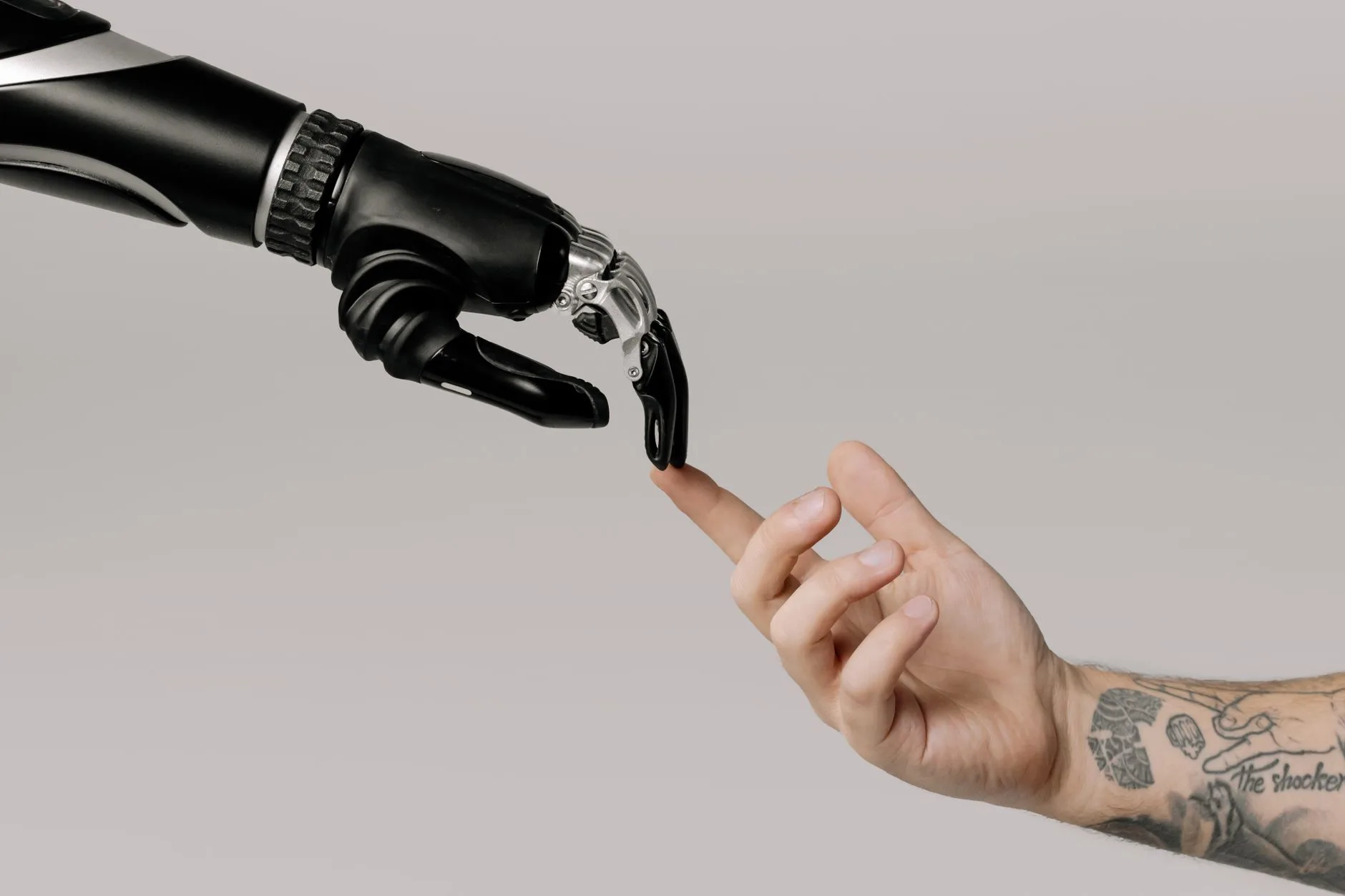
There's a difference between AI that amplifies a human voice and AI that impersonates one. We draw a firm line. The moment content pretends to be a lived experience it never had — a fabricated testimonial, a "personal" story generated wholesale — you're not being efficient, you're being dishonest. Audiences sense it, and increasingly, so do search engines.
Our rule of thumb is simple: AI can shape the delivery, but a human must own the meaning. The insight, the point of view, the decision about what matters — those stay with people who are accountable for them.
What this looks like in practice
When we build AI-assisted marketing systems for clients, we design them around a human checkpoint at the point of judgment, not the point of typing. A content workflow might use AI to research, outline and draft — but a strategist decides the angle before, and an editor injects specificity, opinion and brand voice after. The AI compresses the boring middle; the humans guard the ends.
The same applies to automation. An AI-driven support flow shouldn't hide that it's automated, then collapse the moment a real problem appears. Done well, it handles the routine instantly and hands off warmly to a person the moment empathy is required. That handoff — fast, transparent, respectful of the customer's time — is more human than a queue that keeps someone on hold for twenty minutes.
The uncomfortable truth about mediocre AI content
Generic AI output isn't a flaw in the technology; it's a mirror. Feed it a vague brief and no point of view, and it will faithfully return vague, viewpoint-free text. The brands winning with AI aren't the ones prompting the hardest — they're the ones with the clearest sense of who they are and who they serve. AI just helps them say it more often, in more places, to more people.
In other words, AI raises the value of the things it can't do. Taste. Conviction. A distinctive voice. Real relationships. If anything, the flood of average content makes authentic human perspective more valuable, not less.
A better question than "Will AI replace us?"
The productive question isn't whether AI will replace marketers. It's this: with the hours AI gives back, what will you do that only a human can? Talk to more customers. Sharpen your positioning. Write the one piece that no machine could have written because it required your specific experience. That's where the compounding advantage lives.
Used cynically, AI accelerates the race to the bottom. Used with intention, it clears the noise so genuine human insight can reach more people. The technology is neutral. The strategy is not.
If you're weighing how to bring AI into your marketing without losing the voice that makes your brand yours, we'd genuinely enjoy that conversation — bring your project and let's think it through together.